In this glossary, you will find several concepts that were analyzed in the Architectural Analysis module.
Axis
noun
It is a straight line that joins two points in which spaces and shapes can be organized in a regular way. In addition, this induces the appearance of different perspectives along the route, said line or axis can become imaginary or invisible.
Example: The axis can come to place an element of symmetry and become points in space, vertical planes, defined spaces and steps that point to a landscape or distant view, such as a corridor, a sidewalk, a pathway.
en: Eje
Edge
Noun
Urban edges are insurmountable limits, whether natural or artificial, which limit the daily life of those who live next to them.
Example: There are well-kept urban edges, integrated into the city and, despite limiting the mobility of people, they also provide an aesthetic, environmental or even cultural value, giving the area a particular and unique character. Geographical features such as a coast, a cliff or a beach can be examples of this situation.
en: Borde
Grid
noun
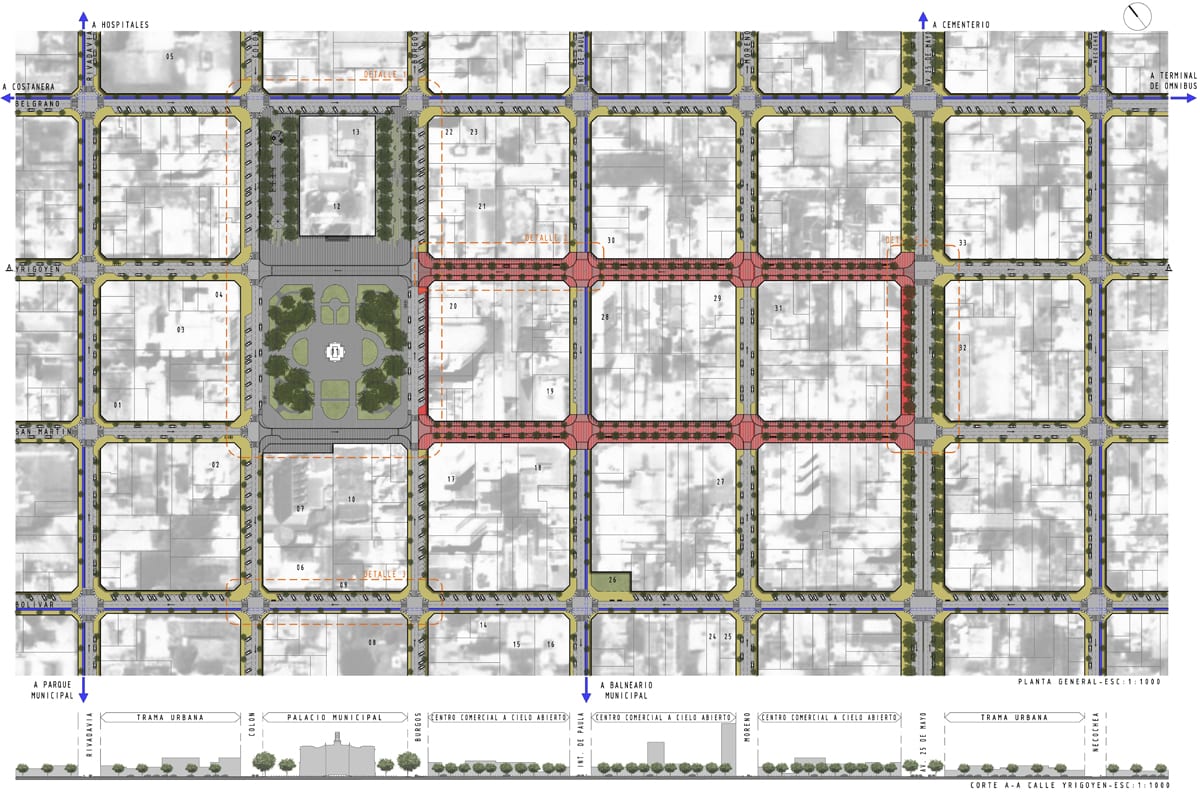
Organization system that divides the different spaces into one grid or pattern.
Example: The grid organization is widely used in the distribution of blocks of a condominium.
en: Trama
Landmark
noun
They are emblematic, recognizable and identifiable points: monuments, representative buildings, iconic places, etc.
Example: The Statue of Liberty is New York's most iconic landmark.
en: Hito
Node
noun
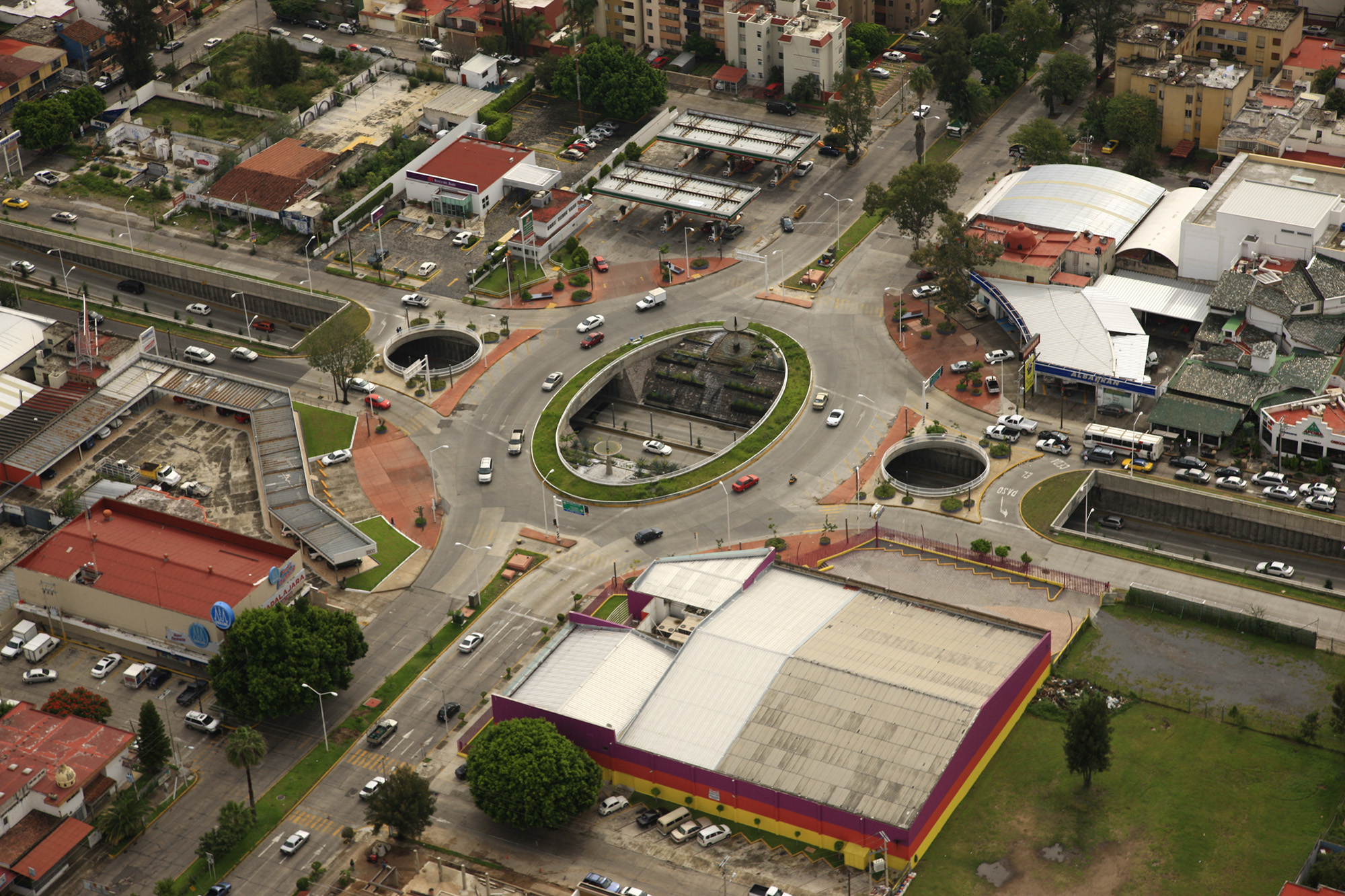
The Nodes are all those strategic points of the city to which the observer can enter and constitute the intensive foci from which he starts or goes. They can be, above all, confluence, sites of a break in transport, a crossroads or a convergence of paths, moments of passage from one structure to another.
Example: The Glorieta del Charro is an important intersection between streets in the state of Colima; so it is considered a node.
en: Nodo
Path and Circulation
noun
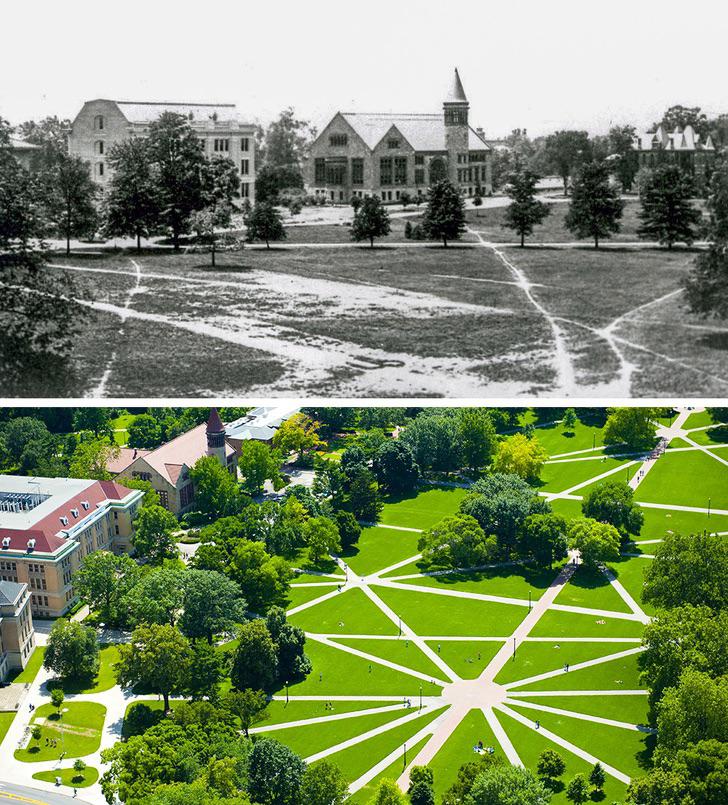
Elements that allow circulation between the different spaces, allowing us to get from one place to another in the shortest possible time and with the least possible complications.
Example: The university students require paths to be able to circulate throughout the university as quickly as possible and without complications.
en: Camino y Circulación
Urban legibility
noun
Characteristic of a space or territory that alludes to the ease of its reading, without visual obstruction. The foregoing helps to identify their environment, its inhabitants and to humanize their urban environment (respect their identity).
Example: The similar shape that the Infonavit houses have, leads to urban legibility, demonstrating an ease in knowing what environment it is about.